PREGNANCY RELATED SKIN CHANGES IN INDIAN SKIN
- January 20, 2026 at 10:58 pm
- Skin Care
Pregnancy is a
phase of profound physiological transformation in a woman’s body. Hormonal,
metabolic, vascular and immunological changes that support fetal development
also have a significant impact on the skin. In Indian women, these changes are
often more visible and pronounced due to higher melanin content, genetic
predisposition and environmental exposure such as heat and sunlight. Most
pregnancy related skin changes are benign and temporary, but understanding them
medically helps reduce anxiety and ensures timely dermatological care when
required.
UNDERSTANDING
HORMONAL CHANGES DURING PREGNANCY
During
pregnancy, levels of estrogen, progesterone and melanocyte stimulating hormone
rise steadily. These hormones influence pigment producing cells, sebaceous
glands, blood vessels and connective tissue. Increased blood flow enhances skin
glow, while overstimulation of melanocytes leads to visible pigmentation.
Indian skin types, which predominantly fall under Fitzpatrick IV and V, respond
more actively to these hormonal signals, making pigmentary changes more
prominent and persistent.
COMMON
PIGMENTARY CHANGES SEEN IN PREGNANCY
1.
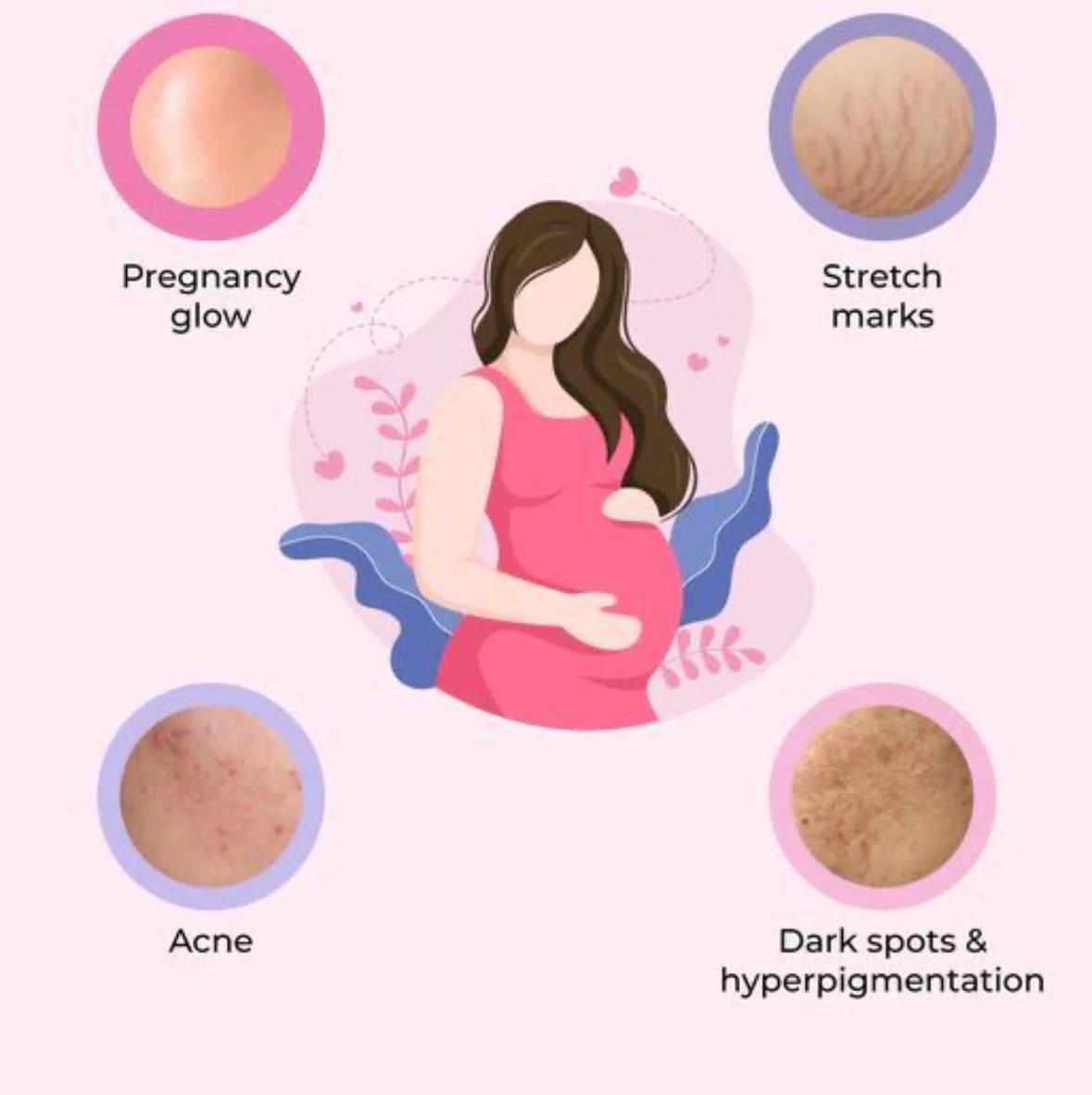
Hyperpigmentation is the most frequent
skin change seen during pregnancy. Melasma commonly appears as brown or grey,
brown patches over the cheeks, forehead, upper lip and jawline. This is often
referred to as the mask of pregnancy and is strongly influenced by hormones and
sun exposure.
2.
Linea nigra presents as a dark vertical
line extending from the navel to the pubic region. This occurs due to increased
melanin deposition along the midline of the abdomen.
3.
Darkening of the nipples, areola,
genital skin and inner thighs is also common. While these changes usually fade
after delivery, some degree of pigmentation may persist, especially in Indian
skin.
STRETCH
MARKS AND CONNECTIVE TISSUE CHANGES
1.
Stretch marks, medically termed striae
gravidarum, occur due to rapid stretching of the skin combined with hormonal
weakening of collagen and elastin fibers. They commonly appear on the abdomen,
breasts, thighs and lower back.
2.
Initially, stretch marks appear reddish
or purplish due to vascular dilation. Over time, they gradually become lighter
and silvery. In Indian skin, post inflammatory pigmentation may make these
marks appear darker and more noticeable for a longer period.
ACNE
AND OILINESS DURING PREGNANCY
1.
Increased progesterone levels stimulate
sebaceous glands, leading to excess oil production. This may cause new onset
acne or worsening of pre existing acne. Lesions commonly affect the face, chest
and back.
2.
Treatment options for acne during
pregnancy are limited due to safety concerns. Self medication and over the
counter products should be avoided. Dermatological consultation is essential to
ensure fetal safety while managing symptoms effectively.
VASCULAR
CHANGES IN PREGNANCY
1.
Increased blood volume and estrogen
levels cause visible vascular changes. Facial flushing and warmth are common
due to enhanced circulation.
2.
Spider angiomas may appear as small red
lesions over the face, neck and upper chest. Palmar erythema presents as
redness of the palms. These changes are benign and usually resolve gradually
after childbirth.
ITCHING
AND DRYNESS OF SKIN
1.
Mild itching is commonly experienced
due to stretching of the skin, especially over the abdomen and breasts. Dryness
may worsen this sensation. Regular use of pregnancy safe moisturizers helps
relieve discomfort.
2.
Severe or generalized itching without
visible rash requires medical evaluation as it may indicate pregnancy specific
dermatoses or underlying systemic conditions.
HAIR
AND NAIL CHANGES DURING PREGNANCY
1.
Many women notice thicker and fuller
hair during pregnancy due to prolongation of the hair growth phase. Hair fall
is usually reduced during this period.
2.
After delivery, increased hair shedding,
known as postpartum telogen effluvium is common. This condition is temporary
and self-limiting.
3.
Nails may grow faster but can also
become brittle in some women due to increased nutritional demands.
PREGNANCY
SPECIFIC DERMATOSES
1.
Certain skin conditions occur
exclusively during pregnancy. Pruritic urticarial papules and plaques of
pregnancy present as itchy red lesions, usually in the third trimester.
2.
Atopic eruption of pregnancy appears as
eczema like rashes in women with a history of allergic skin conditions. Proper
diagnosis and medical supervision are essential for safe management.
SAFE
SKIN CARE PRACTICES DURING PREGNANCY
1.
Gentle cleansing, adequate
moisturization and strict sun protection are the foundation of pregnancy skin
care. Sunscreen use is essential to prevent worsening of pigmentation,
especially melasma.
2.
Avoid fairness creams, steroid based
products, chemical peels and unverified cosmetic treatments without medical
advice. Many commonly used skin care ingredients are contraindicated during
pregnancy.
CONCLUSION
Pregnancy
related skin changes reflect the body’s natural adaptation to support new life.
In Indian skin, these changes may appear more intense but are largely
physiological and manageable. Early dermatological guidance ensures safe skin
care practices, minimizes complications and supports healthy post pregnancy
skin recovery. Individualized care and medical supervision remain key to
maintaining skin health throughout pregnancy.
CONTACT
DETAILS
Elan Skin Care
Clinic, Navi Mumbai
Website: http://elanskincare.in/
Phone: 099200
16171
Email: elanskinsolutions@gmail.com
Address: Ground
Floor, Ekdant CHS, Shop No 4 and 5, Plot 53 and 54,
Author Details
I am a professional blogger interested in everything taking place in cyberspace. I am running this website and try my best to make it a better place to visit. I post only the articles that are related to the topic and thoroughly analyze all visitors’ requests to cater to their needs better.
Most Popular Posts
- October 26, 2018
- Botox
5 REASONS TO CONSIDER BOTOX INJECTIONS TO IMPROVE YOUR FACIAL
APPEAR